

We saw with our own eyes the historical cave of Sof Umar, which highlighted our century
The media group that is on a working visit to Southeast Oromia visited the historical cave of Sof Umar on the occasion of the 21st Nation's Day celebrated under the coordination of the Federation Council and organized by the Oromia region.
Newsroom · · 3 min read · 4
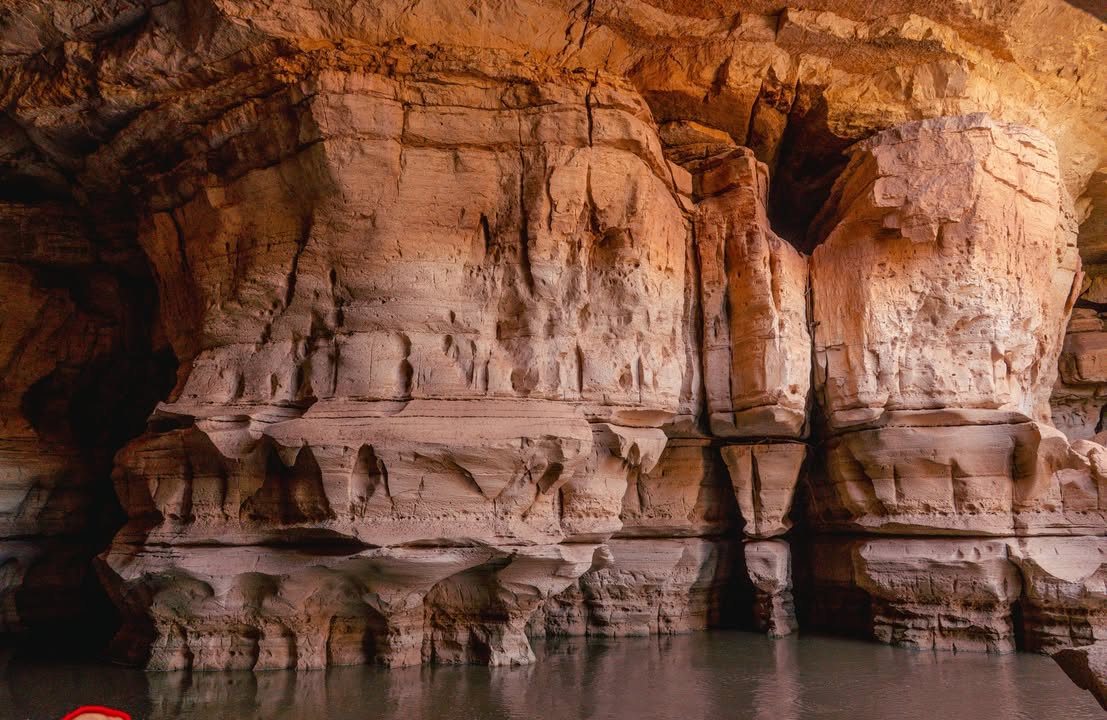
It’s amazing! The media group that is on a working visit to Southeast Oromia visited the historical cave of Sof Umar on the occasion of the 21st Nation’s Day celebrated under the coordination of the Federation Council and organized by the Oromia region.
The Webb River, which descends from the Bale Mountains, travels across the vast land, and when it reaches the foot of a huge limestone rock in East Bale Dawe, Kakana District, it suddenly digs its own underground world and begins another journey. His name is Sof Umar Washa.
Although this wonderful heritage is included in the image on the back page of the 100 Birr note printed in 2013 and is carried around in our pockets, the secret contained in it is an abstract natural architecture that can only be revealed to those who see it in person.
Sof Umar is a great natural and cultural destination that has been placed on the provisional list of World Heritage by the United Nations Educational, Scientific and Cultural Organization (UNESCO).
From the point of view of geology, studies have been done on the age and formation of the limestone, but it is said that Sof Umar cave has not been studied enough in terms of its deep wealth and wonderful nature.
According to the UNESCO heritage document, the cave system was created in the Miocene period, and it is believed that the river Webb changed its course in the previous era and created it by drilling through the limestone.
This underground cave is a living research archive of the Earth’s evolutionary history, past climate changes, and ancient biological remains.
One of Africa’s largest natural caves, this site features massive limestone pillars up to 20 meters tall, intricately shaped supporting arches and tall ceilings that appear to have been carved by human hands. Especially the huge central hall and the natural terrace where you can see the river flowing down near the exit of the cave clearly show the magnificence of the place.
The cave has a total length of 15.1 kilometers and has more than 40 main entrances and exits.
It is expected to take about three and a half hours to travel this underground route in the dark with the help of a flashlight and a map. During this journey, the river bends seven times in the tunnel, so travelers cross the river seven times.
Five of them are crossed on foot and two are crossed using wooden bridges over a main or narrow rock gap. The living creatures in that cave are bats, fishes and crabs, and there are crocodiles in the nearby rivers but they never enter the cave, which is another amazing natural and spiritual mystery.
Apart from its geological beauty, Sof Umar is one of the largest religious caves in the world.
According to the local tradition and the UNESCO heritage document, at the beginning of the 11th century, Sheikh Soof Umar Ahmed, together with his family, made the cave a shelter and a center of spiritual education, and taught the religion of Islam, and the tradition continues to this day. Each part of the cave is dedicated to different spiritual rituals and the twice yearly Muda and other religious rituals attract visitors from near and far.
The recent large-scale infrastructure and lodge constructions at this destination, which is 532 kilometers away from Addis Ababa, will create great potential to make Sof Umar Cave more of a world tourism center.


